25 Years on Track
For 25 years, experiments on a 1.7-mile loop in Opelika have been changing the way America builds and maintains its highways.


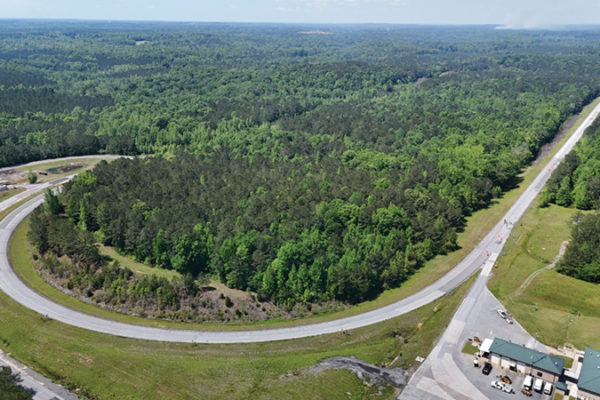
For 25 years, experiments on a 1.7-mile loop in Opelika have been changing the way America builds and maintains its highways.
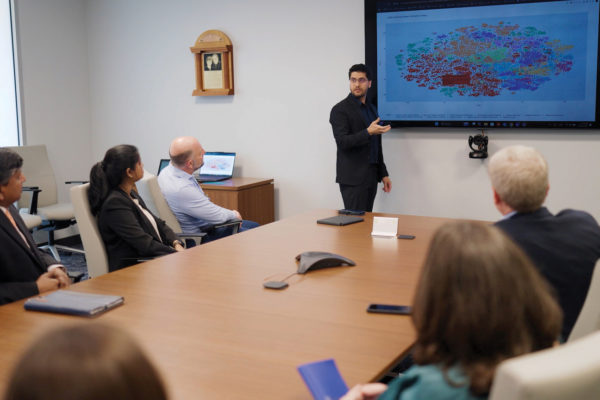
Who leads research in biomedical sensors or sustainable materials? Who’s advancing combustion physics, aero-propulsion or renewable energy? Junior faculty members new to campus need to know who they can collaborate with and whose research intersects with their own.
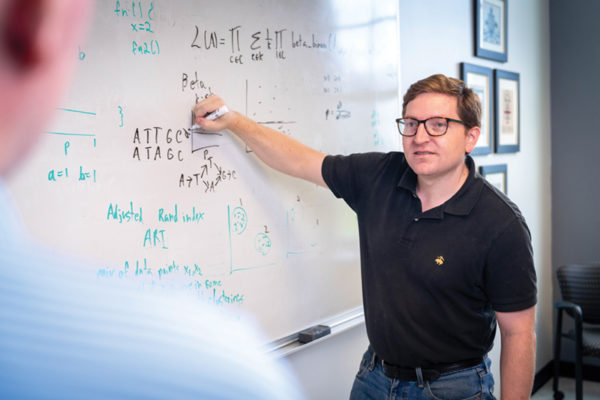
Haynes Heaton, an assistant professor in the Department of Computer Science and Software Engineering, has developed software likely to change the standard of care for leukemia patients undergoing bone marrow transplants.
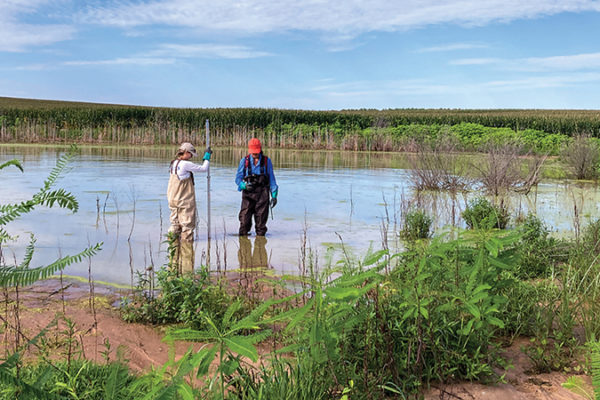
Frances O’Donnell, associate professor of civil and environmental engineering, is partnering with NASA to study geographically isolated wetlands (GIWs) and their environmental impacts.

Pengyu Chen, the Francis Family Associate Professor and Ginn Faculty Achievement Fellow in the Department of Materials Engineering, believes he’ll soon be able to immediately unlock the secrets of your immune system with the prick of a finger.
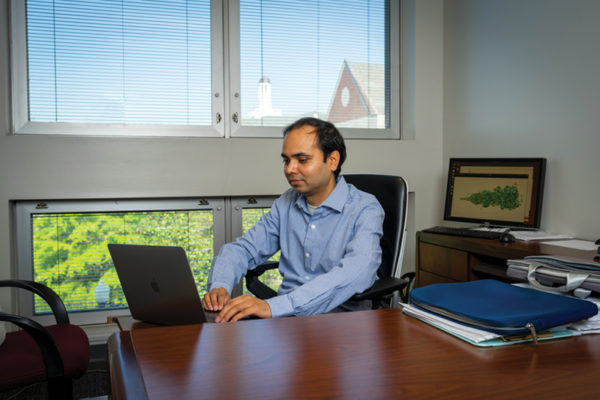
Nek Sharan, assistant professor in the Department of Aerospace Engineering, seeks to understand how 3D geometries vibrate when exposed to fluid flows.
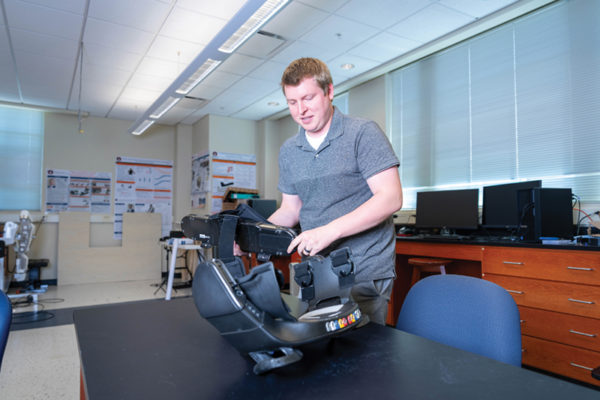
Brendon Allen has some exoskeletons in his closet, and the National Science Foundation (NSF) wants to learn more about them.
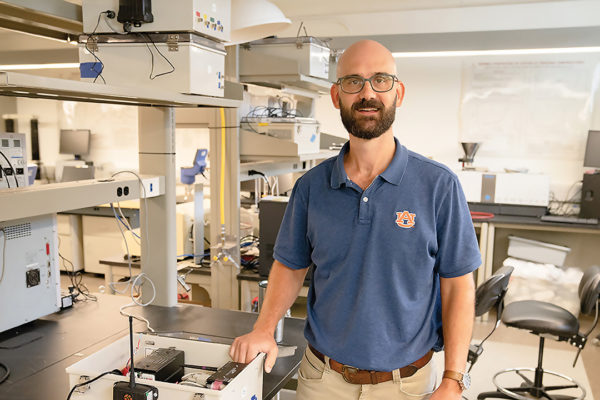
Researchers at Auburn University are studying the effects of natural light in broiler houses on bird performance and welfare.
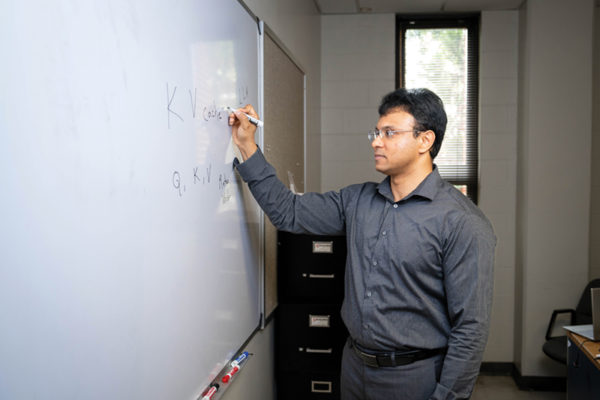
Traditional monolithic chip designs in everyday devices such as cellphones and laptops face significant limitations due to high manufacturing costs and size constraints.
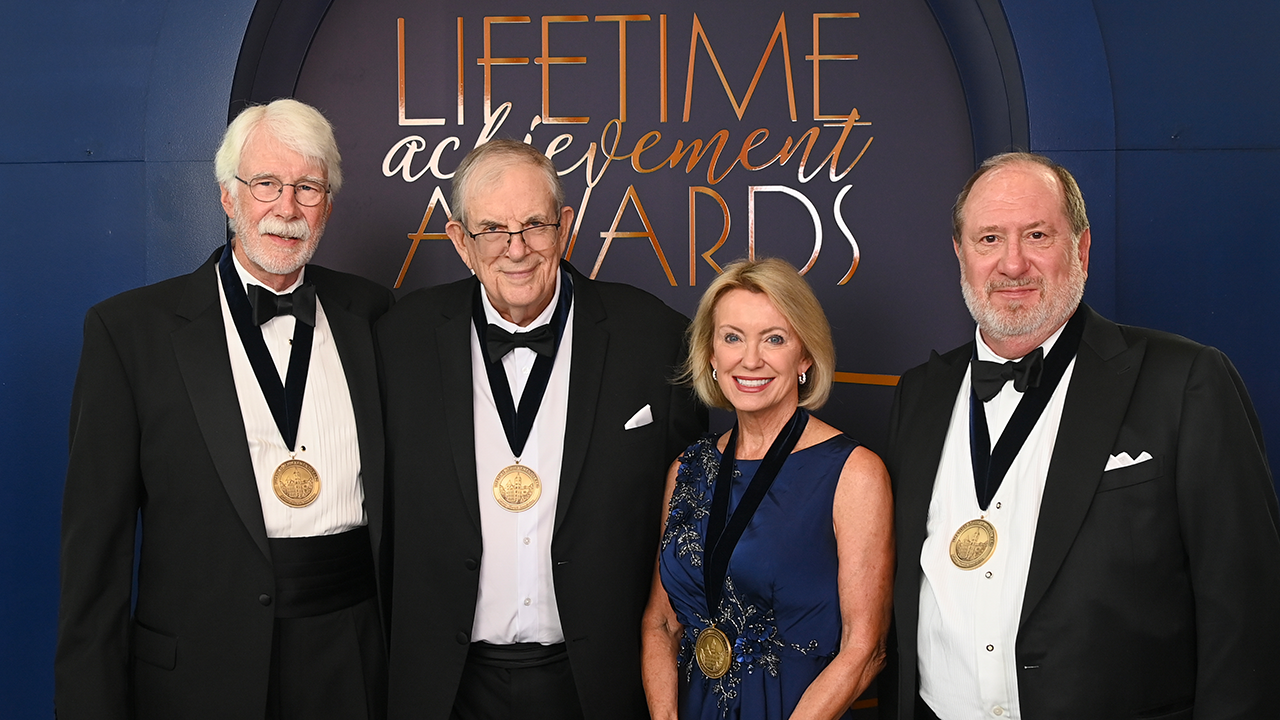
The Auburn Alumni Association celebrated its 2025 Lifetime Achievement Award (LAA) recipients and Young Alumni Achievement Award (YAA) recipient at a gala June 7 at the Gogue Performing Arts Center.
 AUBURN ENGINEERING NEWS